
🐶🌱 Why Do Dogs Eat Grass? Is Vomiting Afterwards Normal? What Dog Owners Should Know

🐶🌱 Your dog loves eating grass... is it because they're unwell, or do they simply want to?
In fact, eating grass is a common behavior in dogs and does not always mean your dog is sick.
Some dogs may eat grass out of natural behavior, hunger or boredom, and in some cases it may be related to the digestive system.
In this article, the PETMED+ veterinary team explains why dogs eat grass, whether vomiting afterwards is normal, when to see a vet, and why you shouldn't let your dog eat grass.
Summary
Eating grass now and then may be normal behavior for a dog, and it doesn't always mean your dog is eating it on purpose to make themselves vomit. Studies have found that only about 22% of dogs vomit after eating grass. If your dog vomits just once but is still playful, eating, drinking and going to the toilet normally, you can continue to monitor them.
However, if your dog eats grass unusually often and also has repeated vomiting, diarrhea, loss of appetite, lethargy, weight loss or blood in their vomit, take them to a veterinarian. You should also watch out for grass that may be contaminated with insecticides, herbicides, animal feces, or worms and parasites. The best approach is not to let your dog eat grass at all.
Table of Contents
Why do dogs eat grass?
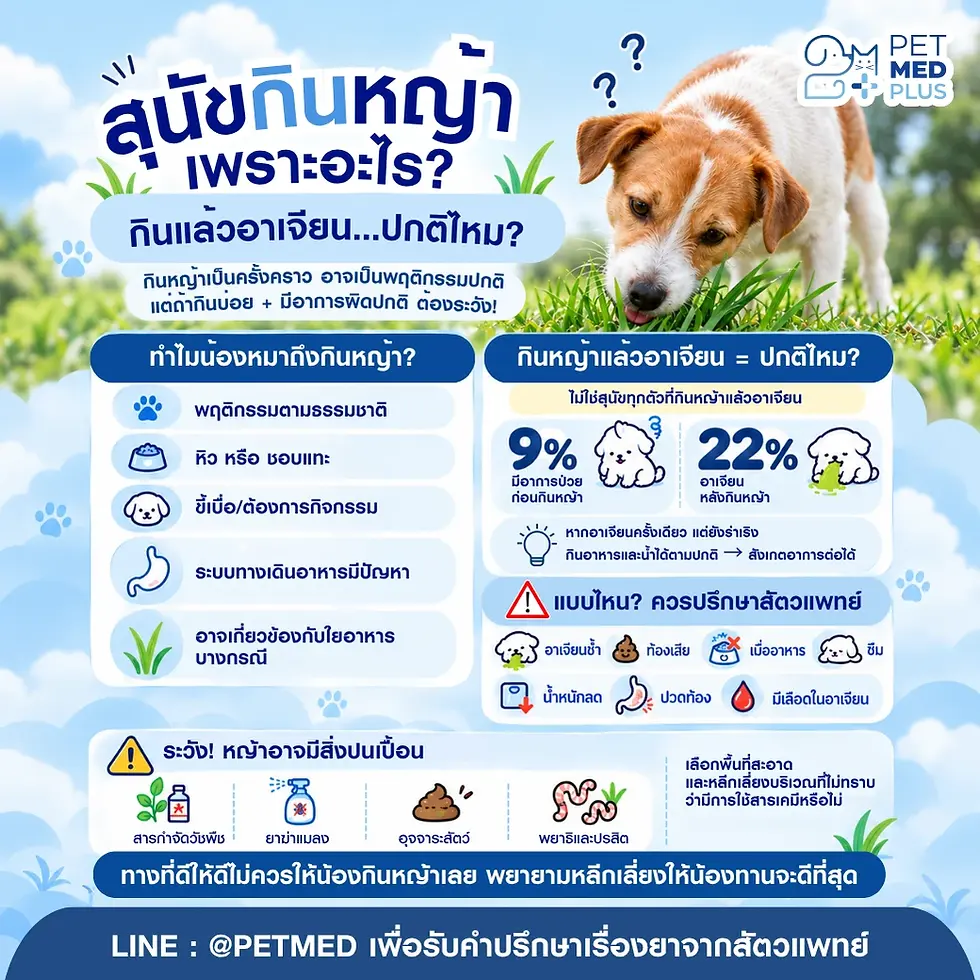
Eating grass is a common behavior in dogs. Your dog may eat grass because of
🐾 Natural behavior
🦴 Hunger, or a love of chewing
🐶 Boredom / a need for activity
🩺 Digestive problems
🌱 A possible link to dietary fiber in some cases
My dog vomits after eating grass — is that normal?
So what if your dog vomits after eating grass? 🤮
It doesn't always mean your dog ate grass on purpose to make themselves vomit, because not every dog vomits after eating grass.
💡 Studies have found that only about 22% of dogs vomit after eating grass, and only about 9% show signs of illness before eating it.
If your dog eats grass now and then and vomits only once, but afterwards is still playful, eating, drinking and going to the toilet normally, you can continue to monitor them. 👀
Reference: Sueda KLC, Hart BL, Cliff KD. Characterisation of plant eating in dogs. Applied Animal Behaviour Science. 2008;111(1–2):37–47.
Watch out! Grass may be contaminated
⚠️ Another thing to be careful about is that the grass your dog eats may be contaminated with
🌿 Herbicides
🧴 Insecticides
💩 Animal feces
🪱 Worms and parasites
Choose clean areas, and avoid places where you don't know whether chemicals have been used.
❌ Ideally, you shouldn't let your dog eat grass at all. Trying to keep your dog from eating it is the best approach.
When should you take your dog to a vet?
If your dog starts eating grass unusually often along with any of these signs, don't dismiss it as normal behavior. Take them to a veterinarian to find the cause. 🩺
⚠️ Repeated vomiting
⚠️ Diarrhea
⚠️ Loss of appetite
⚠️ Lethargy
⚠️ Weight loss
⚠️ Abdominal pain
⚠️ Blood in the vomit
💙 Small details in your dog's behavior can help you spot health problems sooner.
📞 Free Consultation with PETMED+ Veterinarians
Is your dog eating grass unusually often, or vomiting repeatedly, having diarrhea, losing their appetite or becoming lethargic after eating grass?
The PETMED+ veterinary team is ready to give basic advice on grass-eating behavior and on caring for your dog's digestive system.
💙 Because the reasons dogs eat grass differ from dog to dog, watching for other symptoms helps you care for your dog in the right way.
Follow PET MED+ for easy-to-understand tips on dog and cat health and care. 🐶🐱
LINE: @PETMED
About the Author
This article was prepared by the PETMED+ Veterinary Team.
PETMED+ is a pet pharmacy focused on providing accurate information about medicine, nutrition and pet health care, helping pet owners make safe and appropriate decisions for their pets.
Note: The information in this article is for general education only and cannot replace a diagnosis, treatment, or individual advice from the veterinarian in charge of your pet's case.


Comments